






















By Kevin Leoncio, Account Representative, Essential Cares Supplies, Inc.

Most people do not think twice about receipts, but in workplaces where they are handled all day they can become a more meaningful contact point than expected. This article covers what BPA is, why thermal receipts get attention, what the published sources say about repeated handling, and which simple workflow and purchasing changes can reduce unnecessary contact.
It is written for workplace-safety and procurement teams. It is not medical advice, and it does not claim that any product prevents or treats any condition. It describes what public guidance recommends and how a buyer can turn that guidance into specifications.
What BPA is and why receipts come up
BPA, short for bisphenol A, is a chemical produced in large quantities, primarily for polycarbonate plastics and epoxy resins, according to the National Institute of Environmental Health Sciences (NIEHS). It has also been used in thermal paper, which is why receipts appear in exposure discussions.
Thermal receipts are printed with heat, not ink. The paper carries a heat-sensitive coating that produces the printed image, which is why receipt paper is different from the other paper moving through a workplace.
Context matters here. NIEHS and the U.S. EPA both describe diet as the main route of exposure for most people. Receipts are a different pathway that matters mainly for people who handle them repeatedly, which is the group the Washington State Department of Ecology's worker guidance addresses.
What matters most in a workplace setting
- Repeated handling, not one-off contact. Ecology's guidance says people who come in frequent contact with thermal paper, such as cashiers and customers, are most at risk. Occasional contact by a customer is not the same situation as handling hundreds of receipts per shift.
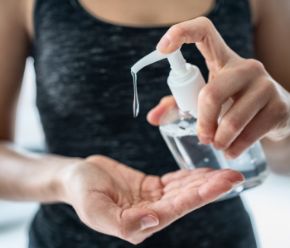
- Wet hands and sanitizer. Research summarized below found that handling receipts right after hand sanitizer increased transfer to skin.
- Receipt-to-food contact. Ecology advises washing hands thoroughly before eating and keeping receipts away from direct contact with food.
- Paper choice. Ecology advises ordering bisphenol-free receipt paper or switching to digital receipts.
What the research says about hand sanitizer and wet hands

A study by Hormann and colleagues, published in PLOS ONE, had participants hold thermal receipt paper immediately after applying a hand sanitizer containing penetration enhancers. As summarized by the Food Packaging Forum, free BPA transferred to participants' hands and to French fries they were eating, and the combined skin and oral absorption was followed by a fast increase in bioactive BPA in blood and total BPA in urine.
A later PLOS ONE paper on how people actually handle thermal paper describes the Hormann findings as showing that sanitizer use increased transfer to skin by factors of roughly 22 to 200 times. That paper also observed 698 college-aged people handling receipts in a cafeteria and found that real-world handling time and hand contact were longer than regulatory exposure models assumed.
Two cautions apply. First, these are single-study and scenario-specific results, and exact multipliers depend on the conditions tested. Second, they describe transfer, not a verdict on any individual's risk. For a business, the useful takeaway is practical: how and when hands touch receipts changes the picture.
thoroughly dry hands after washing and wait for hands to dry after using lotion or hand sanitizer; wash hands before eating; print receipts only on request where possible; order bisphenol-free receipts or move to digital; and wear protective equipment on the hands, such as nitrile gloves, to reduce skin contact with thermal receipts.
A practical exposure-reduction approach
Each control below addresses a different part of the workflow, and most cost little. Gloves are one layer, not the whole answer.
| Control | What it changes | Who typically owns it |
|---|---|---|
| Print less (on request, or digital receipts) | Reduces the number of receipts handled at the source | Operations, POS or IT administrator |
| Bisphenol-free paper | Changes what is on the paper you cannot avoid printing | Purchasing |
| Dry-hand habit | Avoids handling receipts right after sanitizer or lotion | Supervisors, training |
| Wash before eating, keep receipts off food | Separates receipt contact from food contact | Supervisors, facilities |
| Gloves for repeated-contact roles | Reduces direct skin contact with receipt paper | Safety and purchasing |
Buying receipt paper: ask better questions

"BPA-free" on a label tells you about one chemical. Ecology's guidance uses the broader term bisphenol-free, and a PLOS ONE handling paper in the sources below looks at BPA and its alternatives together. When you reorder paper, ask your paper supplier:
- Which developer chemical does the coating use, and can the supplier state it in writing?
- Is the paper described as bisphenol-free or only as BPA-free?
- Does the supplier have a safety data sheet or specification for the paper?
- Is the paper compatible with your printers, so a switch does not cause print-quality problems?
Where gloves fit, and how to specify them
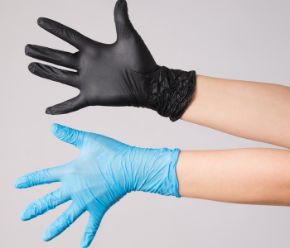
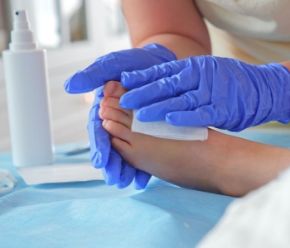
Washington Ecology's worker guidance specifically names nitrile gloves as a way to reduce skin contact with thermal receipts. Gloves are most relevant where receipt handling is constant: checkout stations, registration desks, pharmacy counters and back-office roles that sort or file printed transaction paper.
Ecology's guidance names nitrile gloves but does not specify a medical or exam grade for this task. If the same gloves will also be used for other work, set the specification for that other work. Our article on medical exam gloves vs industrial nitrile gloves explains how to tell the two apart.
For a purchasing specification, decide these items up front:
- Material: nitrile, and whether you need a latex-free option for staff who prefer it.
- Powder-free: state it in the specification so it is not left to the supplier's default.
- Size range: stock the sizes your team actually wears. Gloves that fit poorly get skipped.
- Thickness: thickness is quoted in mil and varies by manufacturer and measurement location. See our nitrile glove thickness guide. Let your staff try samples before committing to a case quantity.
- Count per box: boxes of 100 and 90 both exist, even within one product line, so compare cost per glove, not per box.
- Standards and documentation: if gloves will also serve exam purposes, review our ASTM D6319 guide and request documentation for the exact item.
Illustrative example (hypothetical numbers): if 20 staff each use two pairs of gloves per shift for five shifts a week, that is 200 pairs, or 400 gloves, per week. At 100 gloves per box, that is four boxes per week. Your own usage will differ, so measure it for a few weeks before setting par levels.

Two limits are worth stating plainly. Gloves reduce direct skin contact, but they do not make wet-hand or sanitizer habits irrelevant, and they do not replace printing less or switching paper. Gloves also have to be removed and discarded correctly, and staff should wash hands before eating.
Small workflow changes can go a long way
Thermal receipts are not something most teams think twice about, which is why they are worth a short review. Print less, ask better questions about the paper, keep hands dry, separate receipts from food, and use gloves where contact is routine. For safety and procurement teams that is a manageable standard.
Support high-contact workflows with a clear glove specification
Browse disposable gloves by category, or send Essential Cares the glove type, sizes, count per box and monthly quantity you need, and the team can review available sourcing options.
Browse nitrile and other gloves Exam glove listings Contact Essential CaresFrequently Asked Questions
Do thermal receipts always contain BPA?
No. Some thermal paper uses BPA and some uses other developer chemicals. That is why it helps to ask a paper supplier which chemical is in the coating and to use bisphenol-free wording rather than relying only on a BPA-free label.
Can chemicals from receipts transfer to skin?
Yes. The sources cited below describe transfer from thermal paper to skin, and Ecology's guidance is aimed at people who handle receipts frequently. Occasional contact is a different situation from handling receipts all shift.
Why do wet hands and hand sanitizer matter?
Research on receipt handling after hand sanitizer use found increased transfer to skin compared with dry-hand handling. Ecology's guidance is to wait for hands to dry after washing, lotion or sanitizer before handling receipts.
Do gloves help with receipt handling?
Ecology's worker guidance lists nitrile gloves as a way to reduce skin contact with thermal receipts. They work best alongside printing less, using bisphenol-free paper and keeping hands dry.
What type of glove should we buy for receipt handling?
The guidance names nitrile gloves and does not specify an exam or medical grade. Choose based on your own policy and on any other tasks the gloves will cover, and compare boxes by cost per glove. Related reading: nitrile glove thickness.
Sources
- National Institute of Environmental Health Sciences: Bisphenol A (BPA) (what BPA is and its primary uses)
- NIEHS: BPA research feature (CLARITY-BPA) (diet as the main exposure route; air, dust and water as other routes)
- U.S. EPA: Biomonitoring, Bisphenol A (BPA) (exposure believed to occur primarily through diet)
- Washington State Department of Ecology: Protect Yourself From Toxic Thermal Receipts (summary page, July 2025)
- Washington State Department of Ecology: Protect Yourself From Toxic Thermal Receipts (worker guidance PDF) (nitrile gloves, dry hands, washing before eating, printing less, bisphenol-free paper)
- Food Packaging Forum: BPA, new evidence for thermal paper to be a source of high exposure (summary of the Hormann et al. hand sanitizer study)
- PLOS ONE: Handling of thermal paper, implications for dermal exposure to bisphenol A and its alternatives (handling behavior; sanitizer transfer factors of 22 to 200 cited from Hormann et al.)
 213-743-1401